
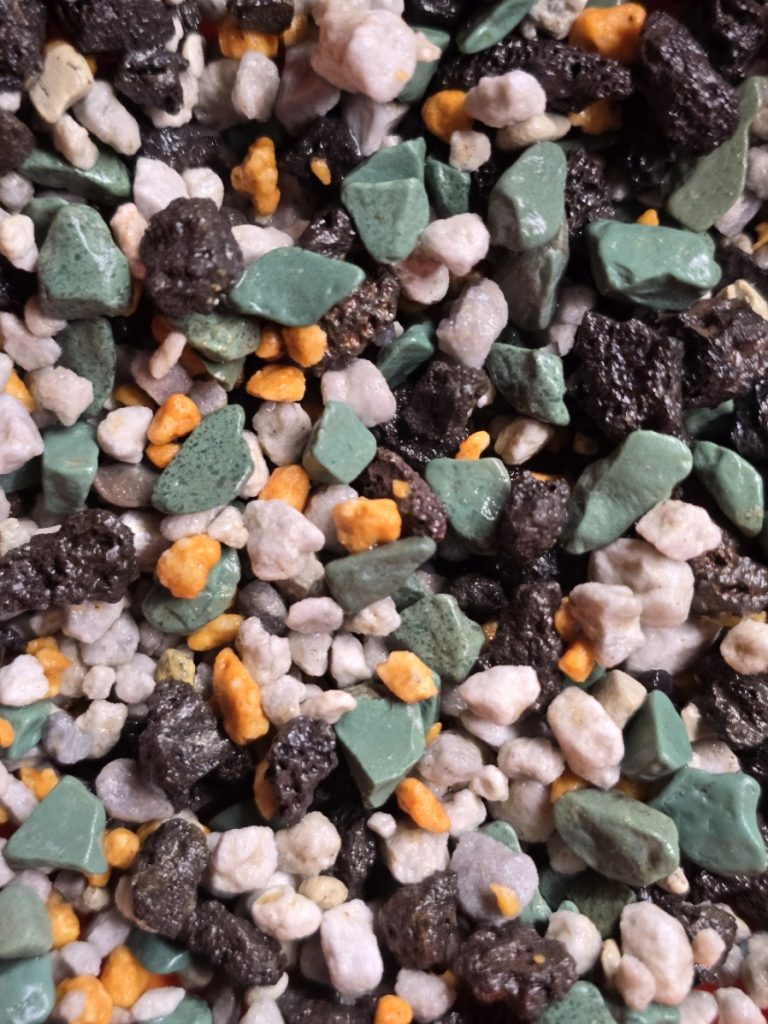
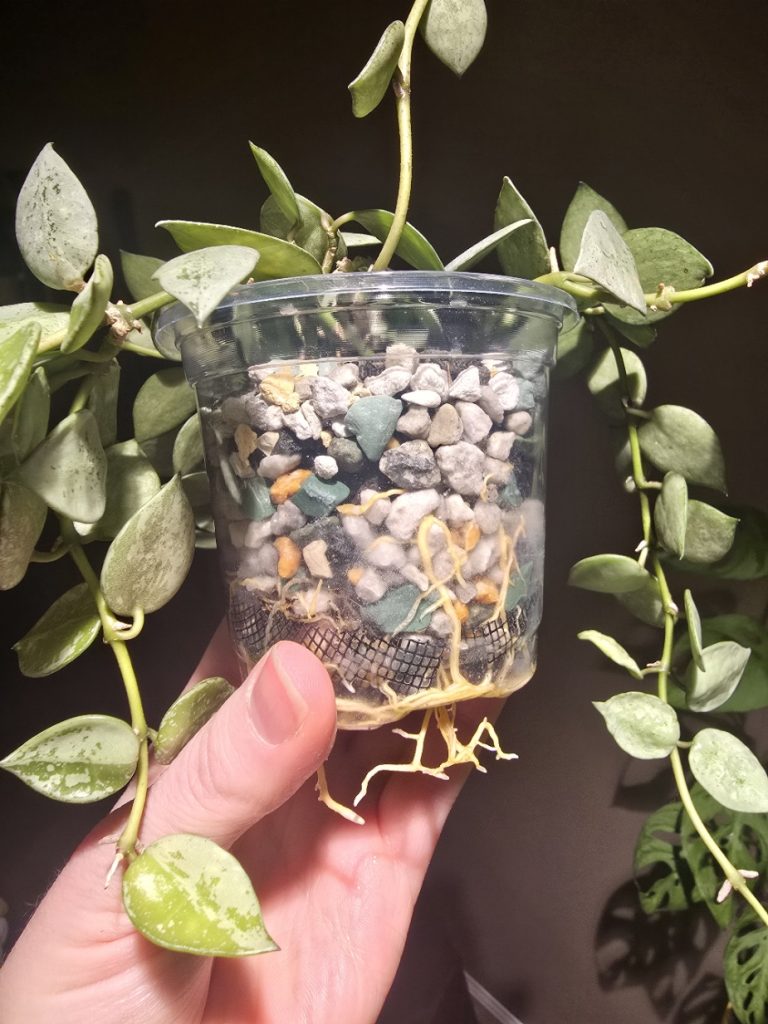
This pon mix recipe is a DIY pon substrate built for growers who want control—over airflow, moisture, and pH—without the complications of traditional soil. Each recipe below uses the same core materials and adjusts only the ratios, allowing you to choose a pH balanced plant substrate that aligns with your plant’s natural preferences.
Why Use a Non-Soil Substrate Instead of Traditional Soil?
Traditional potting soil is built for convenience, not longevity. Over time it compacts, breaks down, and traps moisture, reducing airflow at the root zone—the fastest way to stressed roots and rot.
A non-soil, mineral-based substrate does the opposite. It maintains open air pockets, drains excess water quickly, and stays structurally stable for years. Roots get oxygen when they need it, moisture when they’re ready, and nutrients on a controlled schedule.
The result is stronger roots, fewer pests, less guesswork, and more consistent growth—especially for tropical plants that evolved to cling to trees and rock, not sit in dense earth.
The Base Ingredients
Every recipe uses the same elemental building blocks:
- White pumice – increases airflow and prevents compaction
- Black lava rock – adds structure and stability while supporting root attachment
- Green zeolite – buffers moisture and holds nutrients for gradual release
- Kanuma – lowers pH and provides a softer surface for fine roots
- Optional organic matter – increases moisture retention and microbial activity
Together, these create a chunky mix for tropical plants that drains cleanly and stays structurally stable over time.
pH of Your Ingredients
- White pumice → basically neutral (≈6.5–7.0)
- Black lava rock → neutral to slightly alkaline (≈6.5–7.5) depending on source
- Green zeolite → usually neutral to slightly alkaline (≈6.5–7.5)
- Kanuma → decidedly acidic (≈5.0–5.5)
- Organic part, Pick one:
- Coco Coir Chips → Mild, slight buffering (~5.5–6.5)
- Orchid Bark → Gentle downward shift (~4.5–5.5)
- Sphagnum Moss → Noticeable acidification (~3.5–5.0)
This DIY Pon Mix is perfect for self-watering setups
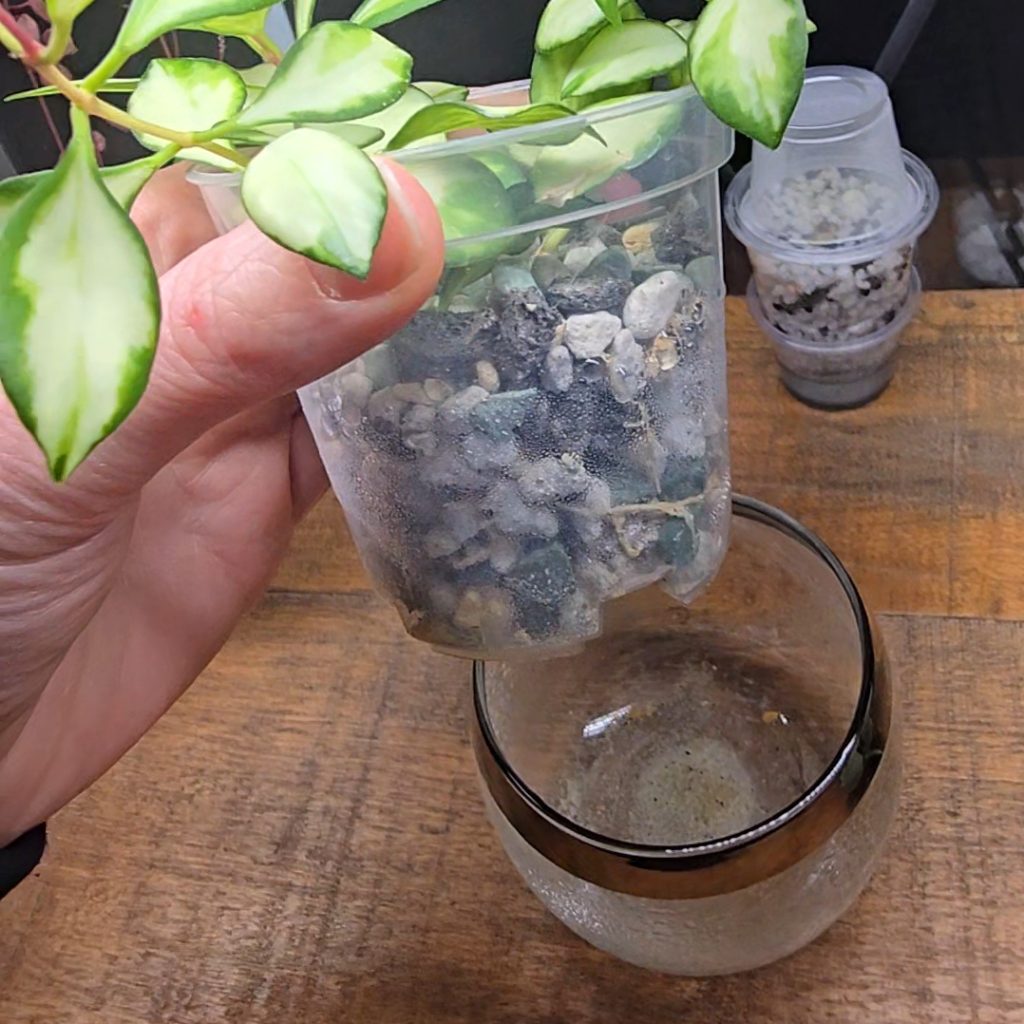
Pon Mix Recipe 1: pH 6.0–6.5
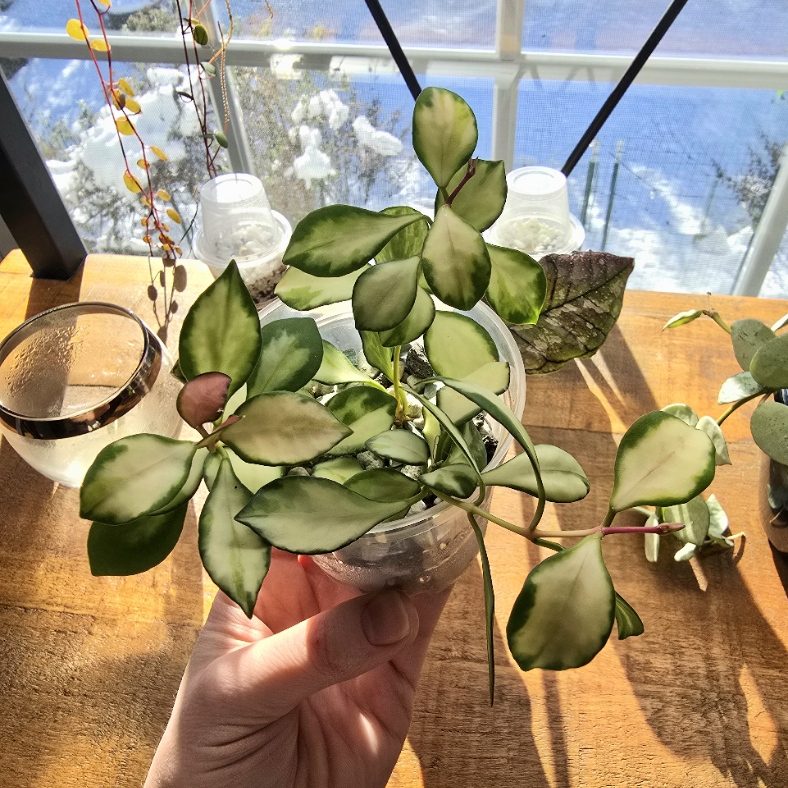
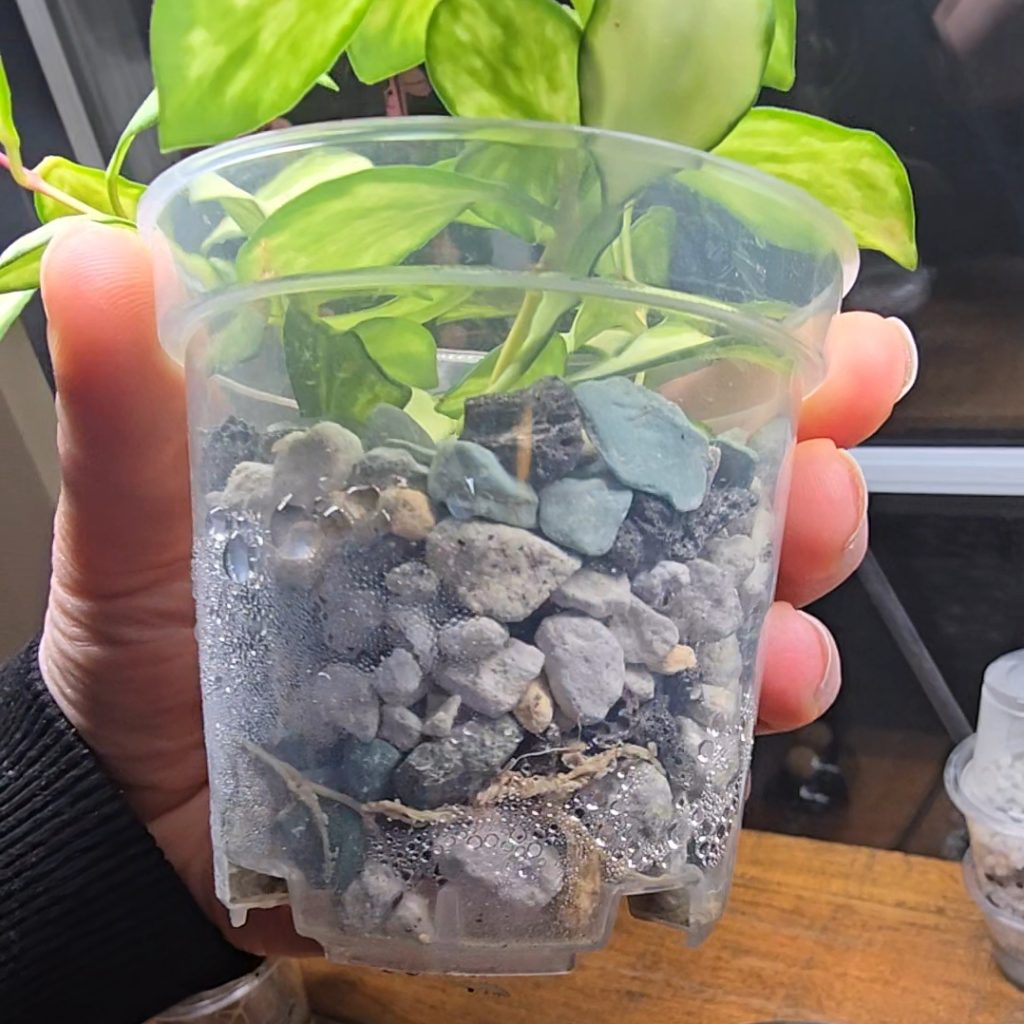
For Monstera, Pothos, and Hoyas
This recipe prioritizes airflow and root oxygen while maintaining a neutral-to-slightly acidic environment. It’s an easy Lechuza pon mix that covers most aroid plants.
Recipe (by parts)
- 2 parts white pumice
- 1 part black lava rock
- 1 part green zeolite
- ½ part kanuma
Target pH: ~6.0–6.5
Mix 2: pH ~5.5
For Philodendrons and Ficus
This aroid substrate mix shifts the pH slightly lower to match philodendron and ficus preferences while maintaining a highly aerated structure.
Recipe (by parts)
- 2 parts white pumice
- 1 part black lava rock
- 1 part green zeolite
- ¾–1 part kanuma
Target pH: ~5.5–5.8
Mix 3: pH 5.5–6.5 (Moisture-Retentive)
For Alocasias and Syngoniums
This version of the pon mix recipe adds controlled moisture retention while preserving airflow and pH stability. This one is great for plant’s that don’t want to dry out completely.
Recipe (by parts)
- 2 parts white pumice
- 1 part black lava rock
- 1 part green zeolite
- ¾ part kanuma
- ½–1 part organic matter
(coco coir chips, orchid bark, or shredded sphagnum)
Target pH: ~5.5–6.5
(Lower with more organic matter, higher with less)
Choosing the Right Recipe
| Plant Type | Target pH | Recipe |
|---|---|---|
| Monstera, Pothos, Hoyas | 6.0–6.5 | Mix 1: Catch-all |
| Philodendrons, Ficus | ~5.5 | Mix 2: Acidity |
| Alocasias, Syngoniums | 5.5–6.5 | Mix 3: Moisture |
Choose by pH first, then adjust watering and organic content to match your environment.
How to Make Pon Mix at Home (Important Notes)
- Choose any scoop size to be 1 part
- Aim to keep all the particle sizes the same
- Always rinse all components before potting
- This is a nutrient-free substrate—fertilize lightly and consistently
- Filtered or rainwater helps maintain pH stability
- Kanuma lowers pH; organic matter slows dry-down
Cost Breakdown: ~$2-6/qt of finished mix
If you only need a few quarts, I’ve sourced the ingredients to make 9 quarts of pon mix. If you want to make 40 quarts and bring your cost way down, I sourced bulk options for you too! I’ve included two kanuma options. The one by Calibonsai has a more precise pH of 5.2-5.6. The cheaper option gives more of a range, but still acidic. I didn’t include any of the organic add-in options in my calculations because they aren’t necessary and most of us have tons of at least one of them already. 😅
That’s much cheaper than that very expensive brand that’s always out of stock at $10.93/qt (2.7 qt bag + shipping). Our cost is only $5.48/qt with the cheaper kanuma or $6.65/qt with the more expensive one—and over 3 times the amount too!
| Ingredient | Bag Size | Price | Cost per Quart |
|---|---|---|---|
| White pumice | 5 qt | $23.99 | $4.80/qt |
| Black lava rock | 2 qt | $13.66 | $6.83/qt |
| Green zeolite | 2.4 lb (≈2 qt) | $9.99 | $5.00/qt |
| Kanuma (cheaper option)* | 1 qt 2 lb (≈2 qt) | $16.99 $12.99 | $16.99/qt $6.50/qt |
| for Mix 3 (pick one): | |||
| Coco coir chips | 2.2 lb (14 qt) | $11.99 | $0.86/qt |
| Orchid bark | 2 qt | $12.85 | $6.43/qt |
| Sphagnum moss | 4 qt | $4.99 | $1.25/qt |
| Total | $60.63* | $5.45/qt* |
Leftovers after making 9 qt → Pumice left: 1 qt, Kanuma left: 1/2 qt (if only 1/2 part used), Lava + zeolite: 0
Compared to that very expensive brand that’s always out of stock at $4.09/qt (16.4 qt bag + shipping). Our cost is $2.56/qt for a total of 40.5 quarts—that’s 2.5 times more than the brand name’s largest bag!
| Ingredient | Bag Size | Price | Cost per Quart |
|---|---|---|---|
| White pumice | 20 qt | $32.99 | $1.65/qt |
| Black lava rock | 10 lb (9 qt) | $24.80 | $2.76/qt |
| Green zeolite | 11 lb (≈9 qt) | $24.99 | $2.78/qt |
| Kanuma | 2 gal (8 qt) | $42.99 | $5.37/qt |
| for Mix 3 (pick one): | |||
| Coco coir chips | 2.2 lb (14 qt) | $11.99 | $0.86/qt |
| Orchid bark | 10 qt | $32.27 | $3.23/qt |
| Sphagnum moss | 14 qt | $11.99 | $0.86/qt |
| Total | $125.77 | $2.56/qt |
Leftovers after making 40.5 qt → Pumice left: 2 qt, Kanuma left: 3.5 qt (if only 1/2 part used), Lava + zeolite: 0
Final Word
This DIY pon substrate is designed for growers who want precision without complexity. Gone are the days of troubleshooting your chunky soil mix. By choosing a soil-free pon mix recipe aligned with the plant’s preferred pH, you create a stable substrate where nutrients flow and roots stay oxygenated—resulting in healthy, consistent growth.
Leave a Reply